Best Whole-Home Dehumidifiers of 2025: Santa Fe, Honeywell, Innovative Dehumidifier & Top Alternatives
Last Updated: Dec 3, 2025Best Whole-Home Dehumidifiers For 2026
If your home feels muggy, smells musty, or struggles with condensation on windows and in the basement, a properly sized whole-home dehumidifier can be one of the most impactful upgrades you make in 2025. This guide walks you through how whole-home dehumidifiers work, how to size and select one, and how brands like Santa Fe, Honeywell, Innovative Dehumidifier and others compare for real-world residential and light-commercial use.
Table of Contents
- Key Summary
- TL;DR
- What Is a Whole-Home Dehumidifier and How Does It Work?
- Whole-Home vs Portable Dehumidifiers: Which Is Better?
- Are Whole-House Dehumidifiers Worth It in 2025?
- How to Choose the Best Whole-Home Dehumidifier for Your House
- Best Whole-Home Dehumidifier Brands of 2025
- Best Whole-Home Dehumidifier for Different Home Types
- How Much Does a Whole-Home Dehumidifier Cost to Install?
- Operating Costs and Energy Use
- Do You Need a Dehumidifier If You Already Have Air Conditioning?
- Maintenance Tips to Keep Your Dehumidifier Performing Like New
- How Whole-Home Dehumidifiers Fit into a Healthy, Efficient Home Strategy
- When to Talk to a Professional (and What to Ask)
- How Rise Can Help You Choose the Right Whole-Home Dehumidifier
- What is the best whole-home dehumidifier brand in 2025?
- How do I size a whole-home dehumidifier?
- Where should a whole-home dehumidifier be installed?
- How long do whole-home dehumidifiers last?
- Can I install a whole-house dehumidifier myself?
- What humidity level should I set on my dehumidifier?
Key Summary
Whole-home dehumidifiers remove excess moisture from your entire house through your duct system or as a dedicated unit, creating drier, healthier air than portable units can manage. In 2025, leading brands like Santa Fe, Honeywell, and Innovative Dehumidifier offer reliable ENERGY STAR–rated options sized from small homes and condos to large custom builds and light-commercial spaces. The right choice for you depends on capacity, installation style, energy use, controls, and how well the unit integrates with your existing HVAC and ventilation strategy.
TL;DR
- Whole-home dehumidifiers are worth it when you have persistent humidity above 50–55%, musty odors, condensation, mold concerns, or a tight, energy-efficient envelope that traps moisture.
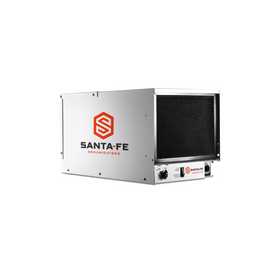
- Santa Fe leads for high-performance, durable units with excellent filtration and cold-climate performance, especially for basements and crawlspaces feeding the whole house.
- Honeywell offers contractor-friendly, ducted whole-home dehumidifiers that integrate easily with central HVAC, great for typical single-family homes with existing ductwork.
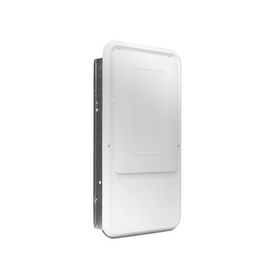
- Innovative Dehumidifier’s IW25 and similar models are ideal for apartments, condos, and small homes that need in-wall, quiet, localized dehumidification without a full duct system.
- Other strong 2025 contenders include Aprilaire and Contractor Nation units; your best option depends on square footage, climate, and installation constraints.
- Expect installed costs between about $2,000 and $5,500 depending on brand, capacity, ductwork complexity, and whether you combine the project with other HVAC or ventilation upgrades.
Product Introduction
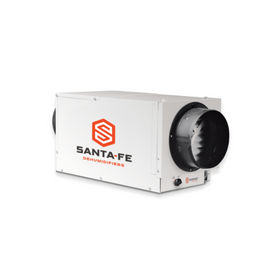
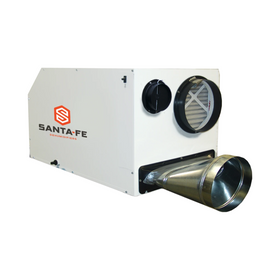
Below, we’ll highlight several whole-home dehumidifier models that align well with Rise’s focus on durable, efficient, and healthy-home upgrades. As you read, imagine a product carousel sitting right here, letting you quickly compare Santa Fe, Honeywell, Innovative Dehumidifier, and a few curated alternatives on capacity, efficiency, and installation style—then click into detailed product pages to confirm sizing and request a quote from your local installer.
What Is a Whole-Home Dehumidifier and How Does It Work?
A whole-home dehumidifier is a permanently installed appliance that pulls moist air from your home, removes water vapor, and then supplies drier air back into your living spaces. Instead of treating one damp room at a time like a portable unit, it is sized to manage the moisture load of your entire home or a large zone, such as a finished basement plus the main floor.
Most whole-home dehumidifiers use refrigeration-based technology. A fan draws humid indoor air across cold evaporator coils, where moisture condenses into water and drains away via a hose or condensate pump. The now-drier air passes over warm condenser coils and is distributed back to the home through ductwork or a dedicated supply grille. Modern units monitor humidity with built-in sensors so they only run when needed, often targeting around 45–50% relative humidity.
- Ducted whole-home dehumidifiers tie into your existing supply or return ducts so dry air is distributed evenly through the house.
- Stand-alone or "plug-and-play" units are commonly used in basements or crawlspaces and may serve as the main moisture control device for the whole structure.
- In-wall or through-the-wall dehumidifiers serve specific apartments, condos, or rooms, giving multi-family and light-commercial buildings a low-profile option.
Whole-Home vs Portable Dehumidifiers: Which Is Better?
Portable dehumidifiers can work well for a single room or a small finished basement, but they often struggle to keep up in whole houses, humid climates, or tightly built, energy-efficient homes. Homeowners frequently find themselves emptying buckets daily, moving units from room to room, and still noticing musty odors or condensation in other parts of the home.
Whole-home dehumidifiers cost more upfront but deliver broader, more consistent control and usually lower long-term maintenance. They connect to a drain, run automatically, and are sized for your actual moisture load instead of working at their limit. When combined with a proper ventilation strategy—such as exhaust fans, ERVs, or balanced ventilation—they create a healthier indoor environment with less mold, dust mites, and structural damage risk.
- Choose a portable dehumidifier if you have a single problem room, are renting, or need a short-term fix.
- Choose a whole-home dehumidifier if your entire home feels damp, your basement influences upstairs humidity, or you are investing in a long-term healthy-home strategy.
- For new construction or deep energy retrofits, whole-home dehumidification is often built into the HVAC design from the start.
Are Whole-House Dehumidifiers Worth It in 2025?
If you live in a humid climate or have a tight, energy-efficient home, a whole-house dehumidifier can be one of the most cost-effective comfort and durability upgrades you make. Many modern high-performance homes are designed to be almost air-tight, which saves energy but can trap indoor moisture from cooking, showers, plants, and even breathing. Air conditioning alone may not remove enough moisture, especially during shoulder seasons when temperatures are mild but humidity is high.
When humidity regularly exceeds 55–60%, the risks go beyond comfort. Dust mites, mold spores, and certain bacteria thrive, wood swells, floors can cup, and insulation or framing can slowly degrade. A properly sized dehumidifier keeps relative humidity in the ideal 40–50% range, which helps protect your home’s structure and finishes, improves indoor air quality, and supports people with asthma, allergies, or chemical sensitivities.
- Better comfort: A drier 75°F can feel cooler than a damp 72°F, allowing slightly higher thermostat settings without sacrificing comfort.
- Healthier air: Lower humidity means fewer dust mites and mold spores and less risk of musty, stubborn odors in closets and basements.
- Home durability: Controlled humidity helps prevent rot, peeling paint, warped flooring, and corrosion in mechanical spaces.
- Energy savings: In some homes, you can ease the load on your AC and run it less aggressively when a dehumidifier does the moisture control.
How to Choose the Best Whole-Home Dehumidifier for Your House
Choosing a whole-home dehumidifier is not just about picking a popular brand. The best unit for you balances capacity, efficiency, sound levels, maintenance, and installation constraints. Think of it as a long-term appliance like a furnace or water heater—something you want to size and install correctly the first time.
Before comparing Santa Fe, Honeywell, and Innovative Dehumidifier models, walk through the key sizing and selection steps below. Many homeowners will still work with a qualified HVAC contractor to finalize sizing, but having a baseline understanding helps you ask better questions and avoid over- or undersized equipment.
1. Understand capacity: pints per day and square footage
Dehumidifier capacity is usually rated in pints per day (PPD) of moisture removed at standard test conditions. Whole-home units often fall between 70 and 150 PPD, with some commercial or large custom home units exceeding 200 PPD. As a rough rule of thumb, a 70–90 PPD unit might serve a tight, modest-sized home or a finished basement, while larger or leakier homes in humid climates benefit from 100–150+ PPD models.
Square-footage estimates from manufacturers can be helpful, but they assume typical ceiling heights and construction quality. A well-insulated, air-sealed 2,000-square-foot home in Minnesota may need a different capacity than a similar-sized coastal home with higher infiltration and moisture loads. When in doubt, get a Manual J or similar load calculation and lean on a trusted installer.
- Smaller or tighter homes and condos: 70–90 PPD units.
- Average single-family homes (2,000–3,000 sq.ft.) in humid regions: 90–120 PPD units.
- Large or leaky homes, or light-commercial: 120–200+ PPD units or multiple units.
2. Decide on ducted vs stand-alone vs in-wall
Next, think about distribution. A ducted whole-home dehumidifier connects to your existing supply or return ducts, or to dedicated ductwork, allowing the unit to treat air from multiple rooms and floors. This is usually the best choice if you already have central forced-air heating or cooling and want even humidity control throughout the home.
If your main issue is a damp basement, crawlspace, or lower level, a stand-alone unit placed in that space and connected to a drain can significantly reduce moisture migrating into upper floors. For multifamily buildings, apartments, and small homes without ductwork, in-wall or through-the-wall dehumidifiers from companies like Innovative Dehumidifier can target specific zones without major remodeling.
- Ducted: best for whole-house coverage when central ducts already exist or can be added cost-effectively.
- Stand-alone: best for basements, crawlspaces, or as a first step when you want to treat the most humid area.
- In-wall/through-the-wall: best for multifamily, condos, or retrofits where running ductwork is very difficult.
3. Look at efficiency and ENERGY STAR ratings
Because a dehumidifier may run hundreds or even thousands of hours per year in a humid climate, efficiency matters. ENERGY STAR–rated units meet strict moisture removal per kilowatt-hour standards and typically feature better compressors, fans, and controls. Over the lifespan of the unit, the energy savings can more than offset a slightly higher purchase price—especially when utility rebates are available.
Check the product’s Integrated Energy Factor (IEF) or similar efficiency metric. Higher numbers reflect more moisture removed for each unit of electricity consumed. Also pay attention to standby power consumption and whether the unit offers smart scheduling, variable-speed operation, or integration with your home automation platform.
- Look for the ENERGY STAR label when possible, especially in humid climates where the unit will run often.
- Consider overall lifecycle costs—including energy use and filter changes—rather than only the upfront price.
- Ask your installer or utility about rebates for high-efficiency dehumidifiers and related HVAC upgrades.
4. Consider noise, maintenance, and filtration
Whole-home dehumidifiers are usually installed in basements, utility rooms, or mechanical closets, which helps keep sound levels low in living spaces. Still, fan and compressor noise can matter if the unit is near bedrooms or a home office. Look for low sound ratings and, where possible, flexible mounting options and vibration isolation.
Maintenance is another key factor. Most units have washable or replaceable filters that should be checked several times per year, condensate lines that need occasional inspection to prevent clogs, and coils that may need to be cleaned if dust accumulates. Some premium models, including many from Santa Fe and Honeywell, offer better filtration, serviceable components, and clear access panels that make annual tune-ups straightforward.
- Choose a location where service technicians can access filters, panels, and drain lines without major disruption.
- Opt for models with simple filter change reminders, diagnostic lights, or app-based alerts if you prefer smart-home visibility.
- Check that the unit’s filtration level (MERV rating, where applicable) fits your indoor air quality goals.
5. Confirm controls and integration with your HVAC and ventilation
Finally, look at controls. Some whole-home dehumidifiers ship with built-in humidistats on the cabinet, while others include wired wall controls that resemble a thermostat. Higher-end models can integrate directly with your HVAC thermostat, home automation system, or dedicated IAQ controller, allowing them to coordinate with your air conditioner, ERV, or HRV.
If you already have a smart thermostat, ask your installer which brands offer the cleanest integration. In many homes, you will run the dehumidifier primarily in cooling season and shoulder seasons, but in certain climates and high-performance homes, it may also run in winter to manage indoor moisture while heat recovery ventilators provide fresh air.
- Wall-mounted humidistats are convenient for everyday use and typically more accurate than onboard dials alone.
- Smart controls with app access and data tracking help you see how humidity changes over the year and adjust settings.
- For the most efficient system, integrate dehumidification with ventilation and temperature control in one coordinated plan.
Best Whole-Home Dehumidifier Brands of 2025
Several manufacturers focus on long-lasting, high-performance whole-home dehumidifiers rather than low-cost, portable units. Below, we walk through how leading brands like Santa Fe, Honeywell, and Innovative Dehumidifier compare for real-world residential and light-commercial situations. The goal is not to crown a single winner but to match brand strengths to specific home types and priorities.
Santa Fe: High-Performance, Built-to-Last Dehumidifiers
Santa Fe has built a reputation among building scientists, home performance contractors, and healthy-home enthusiasts for rugged, efficient dehumidifiers that perform well even in demanding conditions. Many of their models are designed for basements and crawlspaces but can be ducted to treat the entire home, especially in two-story houses where the lower level drives much of the moisture load.
Santa Fe units typically feature high-capacity coils, robust steel cabinets, and good filtration, making them well suited to homes with persistent moisture, mold concerns, or challenging climates. While they may cost more upfront than some competitors, homeowners often appreciate their reliability and the way they integrate with broader building science strategies like air sealing, insulation upgrades, and balanced ventilation.
- Ideal for: Damp basements, crawlspaces, and whole-home moisture control in challenging climates.
- Strengths: High build quality, strong performance at lower temperatures, and compatibility with ducted or stand-alone setups.
- Considerations: Higher upfront cost and typically professional installation required for ducted applications.
Honeywell: Contractor-Friendly Whole-Home Solutions
Honeywell-branded whole-home dehumidifiers are widely available through HVAC distributors and are popular with installers who want reliable, straightforward equipment. These units are usually ducted, integrating with your existing forced-air system to condition multiple rooms without adding a patchwork of portable units. Controls are intuitive, often pairing with simple wall-mounted humidistats or compatible thermostats.
Many Honeywell models are optimized for typical single-family homes: think 1,800 to 3,000 square feet with existing central air conditioning and ducts. This makes them a strong candidate if you want a familiar, widely supported brand that most contractors in your area already understand. For homeowners, that can mean easier service, faster replacement parts, and a smoother installation process.
- Ideal for: Typical suburban homes with central HVAC where whole-house evenness and ease of service are priorities.
- Strengths: Broad contractor support network, straightforward controls, and good integration with standard HVAC setups.
- Considerations: May not offer the ultra-specialized crawlspace models or niche controls that some high-performance homes require.
Innovative Dehumidifier: In-Wall Solutions for Condos and Multi-Family
Innovative Dehumidifier specializes in compact, in-wall and through-the-wall units like the IW25 series. These dehumidifiers are designed for situations where you cannot easily install a large ducted unit but still need reliable moisture control in individual apartments, condos, or smaller homes. Instead of taking up floor space, the unit recesses into a wall cavity, exhausting moisture directly to a drain line and providing quiet, continuous operation.
These models are popular in multifamily buildings and student housing where property managers want low-maintenance, tamper-resistant humidity control in each dwelling. Homeowners in townhomes or small condos may also appreciate the clean look and reduced clutter compared to a portable unit. They pair well with other integrated solutions like ductless heat pumps or ERVs that are common in modern, compact housing.
- Ideal for: Apartments, condos, small homes, and multi-family buildings without central ducts.
- Strengths: Discreet in-wall design, quiet operation, and low day-to-day interaction needed from residents.
- Considerations: Typically serves a single zone or unit rather than an entire large home; planning for drainage and wall space is critical.
Other Top Whole-Home Dehumidifier Brands to Consider
While Santa Fe, Honeywell, and Innovative Dehumidifier cover a wide range of situations, a few other manufacturers offer competitive whole-home options that may be more readily available or better supported in specific regions. Talking with a local contractor about which brands they trust and stock can be just as important as reading spec sheets online.
Aprilaire and Contractor Nation dehumidifier brands are strong contenders in 2025. These companies often focus on integration with broader indoor air quality systems: think dehumidification plus fresh-air ventilation, filtration, and smart controls. If you are planning a larger HVAC renovation—or building a high-performance new home—pairing these systems thoughtfully can deliver excellent comfort with minimal energy use.
- Aprilaire: Known for whole-home IAQ solutions and dehumidifiers that integrate with ventilation and filtration systems.
- Contractor Nation ffers high-capacity, often ENERGY STAR–rated units designed for tight homes and challenging moisture loads.
Best Whole-Home Dehumidifier for Different Home Types
Matching a dehumidifier brand and style to your specific home type is more important than finding a universal "best" unit. Below, we outline common residential and light-commercial scenarios and suggest which product categories tend to work best. Use this as a directional guide and then confirm sizing and details with a professional.
Small Homes, Townhomes, and Condos
Smaller homes and attached housing can still have big humidity issues, especially if they’re tightly built and rely on spot ventilation alone. But adding a large ducted dehumidifier might not be practical if there isn’t enough mechanical space or existing ductwork. In these situations, compact ducted units, in-wall dehumidifiers, or a combination of targeted dehumidification and ventilation often makes sense.
Innovative Dehumidifier’s in-wall options and certain smaller-capacity units from Honeywell or Aprilaire work well here. You may serve the entire condo with a single, centrally located unit or use multiple smaller in-wall devices for separate rooms. If your building has shared mechanical systems, work closely with the HOA or property manager to align with fire and sound codes.
- Priorities: quiet operation, compact size, and minimal intrusion into already tight living spaces.
- Brands to explore: Innovative Dehumidifier, smaller Honeywell or Aprilaire units, and select Santa Fe models.
- Installation tip: Plan drainage carefully in multi-story buildings to avoid leaks and code issues.
Typical Single-Family Homes with Basements
For many North American homes, humidity problems stem from damp basements or crawlspaces that feed moisture into the rest of the structure. When this is the case, a high-quality basement dehumidifier that either recirculates air within the basement or is ducted into the central system can dramatically improve comfort upstairs. This is where Santa Fe’s offerings often shine.
Another approach is to install a ducted Honeywell or Aprilaire whole-home unit in the basement that treats return air before it reaches the air handler. This configuration allows the dehumidifier to operate independently from the air conditioner, meaning it can control humidity even when you don’t need cooling. That flexibility is particularly valuable in shoulder seasons and cooler, rainy periods.
- Priorities: managing moisture at its source, protecting finishes and storage, and balancing performance with energy use.
- Brands to explore: Santa Fe, Honeywell, Aprilaire.
- Installation tip: Combine dehumidification with air sealing, drainage improvements, and, where feasible, basement insulation upgrades.
Large Custom Homes and Light-Commercial Spaces
Large homes with multiple wings, high ceilings, or extensive glazing often have varied moisture loads by zone. Light-commercial spaces like small offices, daycare centers, and boutique retail stores share similar challenges: they may be occupied heavily at certain times of day, have intermittent cooling loads, and need dependable indoor air quality year-round. In both cases, a single small dehumidifier may not be enough.
For these projects, design professionals often specify one or more high-capacity dehumidifiers, sometimes paired with dedicated outdoor air systems or ERVs. Brands with a strong engineering support network, such as Santa Fe, become especially valuable. Multiple smaller units serving different zones can also improve redundancy and allow right-sized operation during partial occupancy periods.
- Priorities: zoning flexibility, redundancy, and compatibility with advanced control strategies.
- Brands to explore: Santa Fe, higher-capacity Honeywell and Aprilaire units, and light-commercial dehumidifiers recommended by your mechanical engineer.
- Installation tip: Coordinate dehumidification with ventilation and heating/cooling using a single, integrated design to avoid comfort conflicts.
How Much Does a Whole-Home Dehumidifier Cost to Install?
Budgets matter. As of 2025, homeowners in the United States can typically expect installed costs for a whole-home dehumidifier to fall somewhere between about $2,000 and $5,500. Where you land within that range depends heavily on the unit’s capacity, brand, and how much new ductwork or electrical work is required.
High-capacity units from brands like Santa Fe tend to cost more than smaller, entry-level models, but they also cover more area and are designed for longer service lives. If your home already has accessible ductwork and a convenient place for the unit and condensate drain line, installation will be simpler and less expensive. If your contractor must build new ducts, reconfigure returns, or carve out mechanical space, labor costs rise accordingly.
- Equipment cost: Roughly $1,300 to $3,000+ depending on capacity, efficiency, and brand.
- Labor and materials: Often $700 to $2,500 for ductwork, electrical, condensate drainage, and controls.
- Potential add-ons: Upgraded filtration, smart controls, condensate pumps, or combined ERV/HRV ventilation systems.
Operating Costs and Energy Use
Once installed, your dehumidifier’s operating cost depends on how often it runs, local electricity rates, and the unit’s efficiency. In many climates, the unit will run most frequently in the summer and during humid spring and fall periods. In very humid regions or homes with persistent moisture sources, it may operate for many hours each day, so paying attention to ENERGY STAR ratings is worthwhile.
Many homeowners see monthly electricity increases in the range of a few dollars to perhaps $25–$40 during peak humidity periods when adding a whole-home dehumidifier. However, the improved comfort may allow you to raise your AC setpoint slightly, partially offsetting this added load. When you factor in reduced risk of mold remediation, floor replacement, or structural repairs, the long-term cost picture often improves further.
- Set your target humidity around 45–50% rather than 35–40% to balance comfort with reasonable energy use.
- Use smart or programmable controls so the unit does not run unnecessarily when the home is unoccupied or naturally dry.
- Address bulk water issues (leaks, poor drainage, wet foundations) so your dehumidifier is not fighting a losing battle.
Do You Need a Dehumidifier If You Already Have Air Conditioning?
Central air conditioners do remove some moisture as they cool the air, but they are not optimized for humidity control alone. When your thermostat is satisfied but humidity remains high—such as during rainy, mild days or at night—the AC might not run enough to keep your home in the ideal 40–50% range. Oversized air conditioners are especially prone to short-cycling, meaning they cool quickly but fail to remove much water from the air.
A dedicated dehumidifier fills this gap by running based on humidity, not temperature. It can operate independently during shoulder seasons or overnight, drying the air even when you do not need additional cooling. In hot, humid climates or high-performance homes with low sensible cooling loads, a separate dehumidifier is often considered a best practice rather than a luxury.
- Tell-tale signs you need dehumidification besides AC: sticky floors, clammy bedding, persistent musty smells, and condensation on windows even when the thermostat is satisfied.
- If your AC runs almost constantly and your home still feels damp, ask an HVAC professional to evaluate sizing and airflow along with humidity control options.
- Pairing dehumidification with an ERV or HRV can further improve indoor air quality by managing both moisture and fresh-air needs.
Maintenance Tips to Keep Your Dehumidifier Performing Like New
Like any mechanical system, a whole-home dehumidifier needs basic maintenance to perform reliably year after year. The good news is that most tasks are simple, especially if the unit was installed in a location with good access to filters and drain lines. Many homeowners handle routine filter checks themselves and schedule professional service annually or as part of a broader HVAC maintenance plan.
When you compare brands, look for models that make maintenance easy: clearly labeled panels, tool-less filter access, and transparent instructions. Units from Santa Fe, Honeywell, Aprilaire, and similar manufacturers are generally designed with technician access in mind, which indirectly benefits you through shorter, less expensive service calls.
- Check filters every one to three months during heavy use and clean or replace them as recommended.
- Inspect the condensate drain line annually for clogs or kinks and confirm that water flows freely to the drain or pump.
- Have a professional inspect electrical connections, refrigerant components, and coils annually, ideally at the start of humid season.
- Monitor your indoor humidity with a separate hygrometer so you can verify the system’s accuracy and catch problems early.
How Whole-Home Dehumidifiers Fit into a Healthy, Efficient Home Strategy
Dehumidification is only one piece of a healthy home puzzle that also includes ventilation, filtration, and source control. Rise typically recommends approaching moisture control in layers: first fix bulk water and drainage issues, then air seal and insulate appropriately, then ensure balanced ventilation, and finally layer on dehumidification as needed. This approach keeps equipment sizes reasonable and energy bills manageable.
Many of the same homeowners who invest in a whole-home dehumidifier are also interested in ERVs, high-efficiency heat pumps, smart thermostats, and better kitchen and bath exhaust fans. By planning these upgrades together—whether in a single project or in phases—you can build a system that works harmoniously instead of one device at a time fighting to correct the side effects of another.
- Bundle projects where possible: installing a dehumidifier during an HVAC overhaul or basement renovation is often cheaper and cleaner than adding it later.
- Use a whole-home IAQ strategy that also considers radon, CO monitoring, and filtration for fine particles and allergens.
- For new homes, ask your designer or builder to model moisture loads and include dehumidification in the mechanical design rather than as an afterthought.
When to Talk to a Professional (and What to Ask)
Because every home and climate is unique, most homeowners will benefit from at least a brief consultation with an HVAC professional or home performance specialist before committing to a whole-home dehumidifier. A good contractor will look beyond square footage, asking about your home’s age, insulation levels, window quality, existing HVAC equipment, and any visible signs of moisture or mold.
When you contact a pro—ideally after browsing dehumidifier options on a site like Rise—bring a short list of priorities: for example, “We want to eliminate musty smells in the basement, keep upstairs under 50% RH in summer, and avoid a big jump in energy bills.” The contractor can then recommend specific models from Santa Fe, Honeywell, Innovative Dehumidifier, Aprilaire, or others that fit your needs and local supply chain.
- Ask how they calculated the required capacity and whether they performed or referenced a load calculation.
- Confirm how the unit will be ducted or located, where the condensate will drain, and how noise will be managed.
- Discuss controls: Will you get a separate humidistat, integration with your thermostat, or app-based monitoring?
- Request a clear maintenance plan and ask whether they offer annual service packages or can bundle dehumidifier maintenance with seasonal HVAC tune-ups.
How Rise Can Help You Choose the Right Whole-Home Dehumidifier
Shopping for a whole-home dehumidifier can feel overwhelming when you’re comparing pints-per-day ratings, wiring diagrams, and model numbers. Rise’s product guides and curated catalogs are designed to make that process easier. Instead of sifting through hundreds of generic options, you can focus on a manageable shortlist of efficient, durable, and well-reviewed units that align with healthy-home best practices.
By browsing product pages for Santa Fe, Honeywell, Innovative Dehumidifier, and carefully selected alternatives, you can compare capacities, efficiency ratings, installation types, and control options at a glance. From there, many homeowners share the product links and spec sheets directly with their HVAC contractor, streamlining the quote and design process. When you’re ready, you can use Rise’s tools and partner network to connect with local pros who understand modern building science and can install your chosen unit correctly the first time.
- Use capacity filters and comparison charts to narrow down models that match your square footage and climate.
- Save product pages as a project list so you can review them later or share them during contractor meetings.
- Explore related upgrades—like ERVs, range hoods, and high-efficiency HVAC equipment—that pair well with dehumidification.
What is the best whole-home dehumidifier brand in 2025?
There is no single best brand for every home. Santa Fe are often preferred for demanding basements and high-performance homes, Honeywell and Aprilaire offer dependable, contractor-friendly whole-house units for typical single-family houses, and Innovative Dehumidifier serves condos and multifamily buildings well with in-wall solutions. The right choice depends on your home’s size, layout, climate, and how you plan to integrate the unit with your existing HVAC and ventilation.
How do I size a whole-home dehumidifier?
Start with your home’s square footage, climate, and how airtight and insulated it is. Manufacturers list approximate coverage areas, but a proper load calculation or Manual J from an HVAC professional is the most accurate way to choose capacity. Undersized units will run constantly and still leave your home damp, while oversized ones may short-cycle and waste energy. Most average homes end up in the 70–120 pints-per-day range, but basement conditions, ventilation, and occupant behavior all matter.
Where should a whole-home dehumidifier be installed?
Most whole-home dehumidifiers are installed in a basement, crawlspace, utility room, or mechanical closet where there is enough space for duct connections, a condensate drain, and access for maintenance. Ducted units connect to your existing supply or return ducts, while stand-alone or in-wall units treat specific zones directly. The best location is one that captures the most humid air, distributes dry air effectively, and allows a technician to service the unit or replace filters without difficulty.
How long do whole-home dehumidifiers last?
With proper sizing, installation, and maintenance, many whole-home dehumidifiers last around 8 to 15 years, similar to other HVAC components. Premium brands built for continuous duty and harsh conditions can often reach the upper end of that range. Regular filter changes, drain line inspections, and annual professional checkups help extend lifespan and maintain efficiency. Running a unit in extreme conditions or ignoring maintenance needs can shorten its service life significantly.
Can I install a whole-house dehumidifier myself?
Some mechanically inclined homeowners install stand-alone basement units that only require a power connection and drain line. However, most ducted whole-home dehumidifiers require professional installation to ensure proper airflow, safe electrical connections, and code-compliant condensate drainage. Incorrect duct sizing or placement can reduce performance or create noise issues, and poor drainage can lead to leaks or mold. For long-term reliability and warranty protection, professional installation is strongly recommended.
What humidity level should I set on my dehumidifier?
Most experts recommend maintaining indoor relative humidity between about 40% and 50% for a good balance of comfort, health, and building durability. Setting your whole-home dehumidifier to around 45–50% is a practical target for most houses. Going much lower can increase energy use without major added benefits and, in winter, sometimes contribute to very dry air and static. If you have hardwood floors, musical instruments, or sensitive occupants, ask your contractor if a narrower humidity band makes sense.
Sources
- ENERGY STAR — Dehumidifier product specification and efficiency criteria https://www.energystar.gov
- U.S. Department of Energy — Residential dehumidification and indoor humidity guidance https://www.energy.gov
- ASHRAE — Indoor humidity and comfort recommendations (ASHRAE Handbook) https://www.ashrae.org
- Santa Fe Dehumidifiers — Residential and light-commercial product literature and installation manuals https://www.santa-fe-products.com
- Honeywell Home — Whole-home dehumidifier specifications and homeowner guides https://www.honeywellhome.com
- Innovative Dehumidifier Systems — IW25 in-wall dehumidifier technical resources https://www.innovativedehum.com
- Aprilaire — Whole-house dehumidifier selection and IAQ integration guides https://www.aprilaire.com
Rise
At Rise, we strive to make sustainable home improvement easy and accessible for everyone. Whether you're building or renovating, our thoroughly vetted building products will help you reduce your carbon footprint, lower energy costs, and create a more sustainable living or working environment.