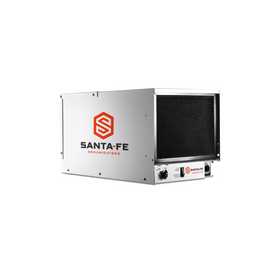
Santa Fe UltraMD33 In-Wall Dehumidifier Review: Performance, Noise, and Real-World Use
Last Updated: Jan 8, 2026Santa Fe UltraMD33 In-Wall Dehumidifier: An Unbiased Expert Review for Homeowners
Thinking about an in-wall dehumidifier for your finished basement, rental suite, or home office? The Santa Fe UltraMD33 is one of the few true built-in options designed to disappear into the wall while quietly controlling humidity. In this long-form, evidence-based review, we walk through how it actually performs, where it works best, its limitations, and what to know before you cut into your drywall.
Table of Contents
- Key Summary
- TL;DR
- What Is the Santa Fe UltraMD33 In-Wall Dehumidifier?
- Moisture Removal Capacity and Coverage Area
- Energy Efficiency: How Efficient Is the UltraMD33?
- Noise Levels: Is the UltraMD33 Quiet Enough for Living Spaces?
- Reliability and Build Quality
- Maintenance Requirements and Access
- Installation Considerations: Between-Stud Design, Drainage, and Electrical
- Controls, Settings, and Everyday Use
- Ideal Use Cases for the Santa Fe UltraMD33
- Limitations and When to Choose Another Type of Dehumidifier
- Pros and Cons of the Santa Fe UltraMD33 In-Wall Dehumidifier
- How the UltraMD33 Compares to Other In-Wall and Portable Options
- Buying the Santa Fe UltraMD33 on an E-Commerce Site Like Rise
- Is the Santa Fe UltraMD33 Right for Your Home? A Quick Decision Guide
- Best Practices for Long-Term Performance and Indoor Air Quality
- Who the Santa Fe UltraMD33 Is Best For
- How many square feet can the Santa Fe UltraMD33 dehumidify?
- Is the UltraMD33 quiet enough for bedrooms?
- Do I need a contractor to install the UltraMD33?
- Can the UltraMD33 replace a whole-home dehumidifier?
- What maintenance does the UltraMD33 require?
- Is the Santa Fe UltraMD33 worth the extra cost over a portable dehumidifier?
Key Summary
The Santa Fe UltraMD33 is a compact, through-the-wall dehumidifier that offers around 33 pints per day of moisture removal at standard conditions, with a quiet, built-in look that suits finished spaces. It shines in small to mid-sized rooms that need continuous humidity control without a floor-standing unit or a large ducted system. However, it requires careful installation, proper drainage, and realistic expectations about coverage area and noise.
TL;DR
- The Santa Fe UltraMD33 is a between-stud, in-wall dehumidifier designed for finished basements, living areas, and small commercial spaces where floor space and aesthetics matter.
- It removes roughly 33 pints of moisture per day at AHAM conditions with a continuous drain, making it a good fit for single rooms up to roughly 1,200 square feet in typical residential use (less in very damp basements).
- Energy efficiency is respectable for a built-in unit, but not as high as the most efficient large-capacity, free-standing basement dehumidifiers; it is designed for quiet, discreet operation rather than maximum pints per kilowatt-hour.
- Noise sits in the low-to-mid 40s dBA range in many real-world installs—quiet enough for hallways, offices, or adjacent rooms, but still audible if you mount it right next to a bed or quiet listening area.
- Installation is more complex than plugging in a portable unit: you need a framed cavity between studs, a dedicated electrical circuit, and a reliable gravity drain or condensate pump routed to a safe discharge point.
- Best for homeowners who want a permanent, nearly invisible humidity solution for finished basements, garden-level suites, or problem rooms—not for whole-home moisture control or extremely wet crawlspaces.
- Maintenance is straightforward (filter changes, coil cleaning), but because it is in-wall, you should prioritize access panels and good installation planning so future service is not a drywall repair project.
Product Introduction
If you are comparing sleek, in-wall dehumidifiers with traditional portable or ducted units, the Santa Fe UltraMD33 typically shows up as a leading option. On an e-commerce site like Rise, you will often see it alongside standard basement dehumidifiers and whole-home systems. Think of the UltraMD33 as a niche, design-forward solution: it costs more than a box-store portable unit, but it keeps your floor clear, protects finished spaces from moisture damage, and operates continuously in the background once installed correctly.
What Is the Santa Fe UltraMD33 In-Wall Dehumidifier?
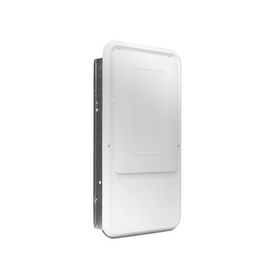
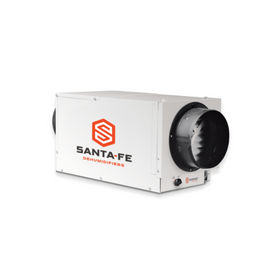
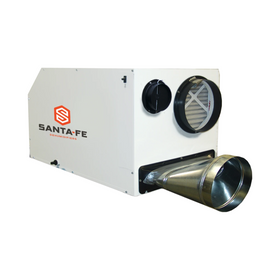
The Santa Fe UltraMD33 is a self-contained, through-the-wall dehumidifier that sits between standard 2x4 or 2x6 wall studs. Only a low-profile grille is visible in the room, while the refrigeration components and drainage connections are hidden within the wall cavity or an adjacent mechanical space. Moist room air is drawn through the upper portion of the grille, passed over cold coils to condense moisture, and then discharged drier through the lower part of the grille.
Because it is designed to be ductless and built into the wall, it aims to bridge the gap between small portable units and larger ducted dehumidification systems tied into a home’s HVAC. It is particularly popular for finished basements, home theaters, offices, and multi-family units where floor space is at a premium and owners want a more permanent, tamper-resistant solution.
- Between-stud design: fits standard residential framing with an in-wall metal sleeve or rough-in kit.
- Rated around 33 pints per day at typical indoor temperature and humidity (AHAM conditions).
- Hard-wired or plug-in power options, depending on local code and installer preference.
- Continuous drainage via gravity drain line or condensate pump; no onboard bucket to empty.
- Intended for year-round operation in conditioned spaces—not for unheated garages or cold crawlspaces.
Moisture Removal Capacity and Coverage Area
Dehumidifier performance is usually expressed in pints of water removed per day at AHAM test conditions (80°F, 60% relative humidity). The Santa Fe UltraMD33 is rated at roughly 33 pints per day, putting it in the light-to-mid capacity range. That makes it powerful enough for single rooms, modest basements, or suites, but not for large, open-concept lower levels with severe water intrusion issues.
In practice, this capacity typically supports up to about 1,000 to 1,200 square feet in a reasonably tight, conditioned space with moderate humidity loads. In a damp basement or a space with frequent moisture inputs (like a laundry room without good ventilation), real-world coverage will be lower. For comparison, many portable dehumidifiers marketed as 50-pint models can serve similar square footage, but they take up floor space and often have noisier, more exposed fans.
- For a small to medium finished basement (500–1,000 square feet), the UltraMD33 can often maintain 45–50% relative humidity when sized correctly and paired with good air circulation.
- For a single large room (home theater, open office, fitness room), one unit is usually sufficient if doors are mostly kept closed and the space is reasonably air-sealed.
- For sprawling basements, multi-room suites, or homes in very humid climates, multiple UltraMD33 units or a larger ducted dehumidifier may be more appropriate.
Because the UltraMD33 is built into a wall, you cannot easily move it if the coverage area proves optimistic. Taking good measurements, understanding your local climate, and being realistic about square footage before purchase are essential steps.
Energy Efficiency: How Efficient Is the UltraMD33?
Energy efficiency for dehumidifiers is often measured as liters or pints of water removed per kilowatt-hour (kWh) of electricity used. Santa Fe generally designs equipment above minimum efficiency baselines, and the UltraMD33 is no exception. It is engineered for continuous-duty operation with relatively modest power draw for its capacity.
That said, if your main goal is to remove the absolute maximum moisture per dollar of energy, a larger-capacity, floor-standing basement dehumidifier may edge out the UltraMD33 in pure efficiency. The UltraMD33 trades a small amount of efficiency for its compact, built-in form factor, quieter operation, and aesthetic benefits.
- Expect power consumption broadly in the 400–600 watt range during operation, varying with humidity level and coil temperature.
- Annual energy costs are moderate when run in a single room, and many homeowners justify them as insurance against mold, drywall damage, and warped flooring.
- The unit performs best in spaces kept near room temperature; very cool basements can reduce capacity and efficiency for any refrigerant-based dehumidifier.
From an energy perspective, think of the UltraMD33 as a high-quality, mid-capacity room dehumidifier with some design-driven overhead. For many homeowners, the tidy appearance and between-stud install are worth the modest trade-off in raw efficiency versus a bulkier unit sitting on the floor.
Noise Levels: Is the UltraMD33 Quiet Enough for Living Spaces?
Noise is often the make-or-break factor for dehumidifiers used in living spaces. While Santa Fe does not always publish a single decibel rating in large type on marketing materials, real-world reports and lab-style measurements place the UltraMD33 in the low-to-mid 40s dBA at typical listening distances. That’s quieter than many portable 50–70 pint dehumidifiers but not completely silent.
Subjectively, many homeowners describe the sound as a soft rush of air with a gentle compressor hum behind it. In a home office, hallway, or basement family room with some background noise, it tends to blend in. In a silent bedroom at night, the fan and compressor will still be noticeable, especially during start-up or high-load operation.
- In-wall mounting reduces mechanical vibration transmitted to the room, compared with a free-standing unit on a hard floor.
- The grille design spreads air flow across a wider face, which can reduce the feeling of a concentrated draft compared to a portable unit blowing from a single point.
- If you are extremely sensitive to noise, placing the unit in a hallway, utility room, or secondary space rather than directly in a quiet bedroom is a safer choice.
Overall, the UltraMD33 hits a reasonable balance: quiet enough for most finished basements and family spaces, but not silent enough to ignore if you mount it in a meditative yoga studio or music listening room.
Reliability and Build Quality
Santa Fe has a long history building robust, serviceable dehumidifiers for basements, crawlspaces, and whole homes. The UltraMD33 follows the same general approach: heavy-duty components, a metal chassis, and parts that can be serviced rather than discarded. Owner experiences tend to show good reliability when the unit is installed correctly with clean power and proper drainage.
Because the UltraMD33 is installed in a wall, Santa Fe designs it to run for years without major intervention, but it still needs basic maintenance. Common long-term issues for any dehumidifier—dust buildup, blocked drains, and operation in very cold or very dirty environments—can reduce lifespan and performance. When homeowners stay on top of filters and drain cleaning, multi-year, trouble-free operation is typical.
- Metal construction and a serviceable design distinguish it from many plastic-portable dehumidifiers with shorter expected lifespans.
- Warranty coverage is competitive for a residential dehumidifier; always confirm current terms and whether they differ between residential and light-commercial applications.
- Professional installation helps avoid early failures due to improper drainage, voltage issues, or insufficient airflow around the unit.
If you are choosing between a low-cost, big-box portable and a higher-end in-wall unit like the UltraMD33, the latter is generally the more durable, serviceable investment—especially in spaces where moisture problems can be costly.
Maintenance Requirements and Access
Every dehumidifier relies on moving air across coils and draining condensate away. If the filter plugs or the drain clogs, performance drops quickly. The UltraMD33 is designed to keep maintenance tasks as accessible as possible given its in-wall location, but planning ahead at installation time is critical.
Routine tasks include cleaning or replacing the air filter, inspecting the drain line, and occasionally checking the coils for dust or biofilm buildup. Depending on climate and household dust levels, filter service is often needed every one to three months during active seasons. Santa Fe and many retailers offer replacement filters sized specifically for the unit.
- Make sure your installer leaves clear access to the front grille so you can reach filters without cutting drywall.
- If the drain line or condensate pump is hidden in an adjacent room or ceiling cavity, include an access panel or removable section to simplify future inspection and cleaning.
- Consider labeling the electrical circuit and keeping a note of the unit’s model and serial number somewhere accessible for future service calls.
With these precautions, ongoing maintenance is simple and similar in effort to caring for a high-quality HVAC air handler or mini-split system.
Installation Considerations: Between-Stud Design, Drainage, and Electrical
Unlike a plug-in portable dehumidifier, the UltraMD33 requires cutting into a wall, framing support, and permanent drainage and electrical connections. For many homeowners, this is a project best handled by a licensed HVAC contractor or experienced remodeler, especially in finished spaces. Understanding the key installation considerations up front will help you decide whether this unit is a good fit for your home.
Framing and Between-Stud Cavity
The UltraMD33 is engineered to fit between typical 16-inch-on-center studs. Installers cut an opening in the drywall, add framing as necessary to support the weight, and slide in a metal sleeve or cabinet that holds the main chassis. Depth is designed for standard interior or exterior walls, but you should verify that insulation, plumbing, or electrical lines will not conflict with the unit.
- Locate the unit on an interior wall when possible to reduce exposure to outdoor temperature swings and simplify flashing and sealing.
- Avoid walls with major structural elements, plumbing stacks, or large electrical bundles unless a professional confirms it is safe to cut.
- Plan for a clear space in front of the grille—furniture, shelving, or doors should not block airflow.
Drainage: Gravity Drain vs. Condensate Pump
Because the UltraMD33 does not include a bucket, all condensate must be routed through a drain line. In the simplest setups, a pitched drain line runs by gravity to a floor drain, sump basin, or utility sink. Where gravity drainage is not possible, an external condensate pump can lift the water up and over obstacles to a suitable discharge point.
- A gravity drain is quieter and more reliable, with fewer moving parts to fail; it is ideal when the unit can be located near an existing floor drain or mechanical room.
- Condensate pumps expand your placement options but add noise and maintenance; they must be sized and installed correctly to prevent leaks or overflows.
- Drain lines should be sloped, supported, and protected from freezing; traps and venting may be needed depending on code and drain connection.
No matter which drainage method you choose, building code and manufacturer guidelines should be followed to reduce the risk of water damage hidden inside walls or ceilings.
Electrical Requirements
The UltraMD33 typically operates on a standard 120-volt household circuit. In many jurisdictions, a dedicated circuit is recommended or required, especially when grouping several mechanical loads in a basement. Some installations use a flexible cord-and-plug connection to a nearby receptacle, while others are hard-wired into a junction box according to local code.
- Confirm the amperage draw and breaker size specified by Santa Fe and coordinate with your electrician.
- If the unit is placed in a damp location, ground fault protection may be required for safety.
- Plan the electrical route at the same time as the drain to avoid conflicts and simplify future troubleshooting.
Electrical work should follow national and local codes; if you are not experienced, hiring a licensed electrician is the safest path.
Controls, Settings, and Everyday Use
Once installed, the UltraMD33 is meant to be largely hands-off. A built-in humidistat or wall-mounted control lets you set a target relative humidity—commonly 45–50% for finished spaces. The unit cycles the compressor and fan to maintain that range, with some seasonal variation in run time depending on outdoor weather and household activities.
Many homeowners set the humidity once and only occasionally adjust it. The most common user interactions are checking the front grille for dust, replacing filters, and listening for any unusual sounds that might indicate a drain or fan issue.
- Maintaining humidity between 40–50% helps discourage mold, dust mites, and musty odors while still feeling comfortable.
- Pairing the UltraMD33 with a small circulation fan or leaving doors open within a suite can help even out humidity across rooms.
- In very humid climates, expect longer run times in shoulder seasons when the air is damp but you are not running much air conditioning.
Because it is built-in, the UltraMD33 tends to feel like part of the home’s infrastructure rather than an appliance you move or adjust frequently—similar to an ERV, HRV, or ducted dehumidifier.
Ideal Use Cases for the Santa Fe UltraMD33
The UltraMD33 works best where aesthetics, reliability, and continuous control matter more than absolute lowest cost. If you recognize your home in any of the scenarios below, this in-wall unit may be a strong candidate.
- Finished basements with drywall, luxury vinyl plank, engineered wood, or carpet, where you want to protect your investment without a noisy portable unit in the middle of the room.
- Garden-level or basement rental suites where a tamper-resistant, built-in dehumidifier reduces the risk that tenants unplug or move a portable unit.
- Home theaters or media rooms that need stable humidity to protect electronics, seating, and finishes, without visible equipment taking up floor space.
- Home offices or small commercial spaces in humid climates where clients or staff expect a clean, professional appearance.
- Condos or townhomes where floor space is tight, but you have control over interior wall modifications and can tie drainage into existing plumbing.
For unfinished basements, crawlspaces, and large, open lower levels, a higher-capacity, free-standing or ducted dehumidifier is often a better match. The UltraMD33 is optimized for smaller, finished spaces where appearance and comfort are front of mind.
Limitations and When to Choose Another Type of Dehumidifier
No single dehumidifier suits every home. The UltraMD33’s strengths—built-in aesthetics, moderate capacity, quiet operation—come with trade-offs. Understanding these helps set realistic expectations and prevents buyer’s remorse.
- Installation is more expensive and complex than a plug-in portable; cutting into finished walls, adding drainage, and possibly hiring an electrician all add cost.
- Once installed, location is fixed; if you misjudge coverage or air circulation, moving the unit later involves more construction.
- Capacity is modest for very wet basements or large areas; if you regularly see standing water or extremely high humidity, a larger, ducted unit may be more appropriate.
- Because it is refrigerant-based, performance drops in cool spaces near or below about 60°F; for very cool basements or shoulder seasons, a different moisture strategy may be required.
- Noise, while well-controlled, is not zero; ultra-quiet spaces may still require strategic placement or an alternative solution.
If you rent, are planning to move soon, or simply want the lowest up-front cost, a high-quality portable dehumidifier may be the better short-term choice. The UltraMD33 shines when you are committed to a particular space for the long term and prioritize clean aesthetics and robust equipment.
Pros and Cons of the Santa Fe UltraMD33 In-Wall Dehumidifier
Summarizing the major strengths and weaknesses can make comparison shopping easier. Here is how the UltraMD33 typically stacks up for residential and light-commercial owners.
Pros
- Discrete, in-wall design keeps floor clear and blends with finished interiors.
- Solid build quality and long-term reliability compared with many budget portables.
- Continuous drain eliminates the need to empty buckets and supports 24/7 operation.
- Good noise control for finished spaces; typically quieter than many free-standing dehumidifiers of similar capacity.
- Appropriate moisture removal for single rooms and modest-sized finished basements.
- Serviceable components and filter system designed for ongoing maintenance rather than single-use disposal.
Cons
- Higher up-front cost than most plug-in units, especially once professional installation is included.
- Limited coverage compared with large-capacity ducted dehumidifiers; multiple units may be needed for big spaces.
- Installation requires cutting into walls, planning drainage and electrical, and coordination with building codes.
- Not ideal for unconditioned or very cold spaces where coil temperatures can limit performance.
- Noise, though controlled, can still be noticeable in nearby quiet rooms if the unit cycles frequently.
For many homeowners with finished basements or suites, the pros outweigh the cons, but it is important to evaluate your specific space before committing to an in-wall system.
How the UltraMD33 Compares to Other In-Wall and Portable Options
When comparing options, most homeowners weigh the UltraMD33 against two main categories: other in-wall dehumidifiers and higher-capacity portable units. Direct apples-to-apples in-wall alternatives are relatively rare, which is why the UltraMD33 often appears as a go-to recommendation on specialized e-commerce platforms.
- Versus other in-wall units: The UltraMD33 tends to offer higher capacity, more robust construction, and better long-term support, but may cost more up front.
- Versus portable dehumidifiers: Portables are cheaper and plug-and-play, but they occupy floor space, can be louder and less durable, and rely on manual bucket emptying unless you rig up a drain hose.
- Versus ducted whole-home units: Ducted systems can manage humidity across multiple rooms or entire homes and often deliver superior efficiency per pint, but their installation complexity and cost are significantly higher.
For design-driven homeowners, the UltraMD33 sits in a sweet spot: more permanent and aesthetically pleasing than a portable unit, but less complex than a full ducted dehumidification system.
Buying the Santa Fe UltraMD33 on an E-Commerce Site Like Rise
When you buy the UltraMD33 from a building-science-focused retailer like Rise, you benefit from curated products, clearer technical information, and support that understands whole-home moisture dynamics. Instead of scrolling through dozens of generic units, you are typically comparing a small set of well-vetted models, including the UltraMD33 and possibly larger basement or whole-home dehumidifiers.
To make an informed purchase, pay close attention to the product detail page: look for confirmed capacity and coverage recommendations, installation manuals, cut-sheet drawings, and compatible accessories like wall sleeves, condensate pumps, and replacement filters. Many platforms also provide customer reviews and Q&A sections that reveal how the unit performs in climates and applications similar to yours.
- Confirm whether your order includes the in-wall sleeve or rough-in kit, or if it must be purchased separately.
- Check lead times and shipping details; dehumidifiers can be heavy, and curbside delivery may require planning for assistance to move it safely.
- Verify return policies, especially if you are coordinating with an installer who may discover unexpected site conditions.
If you are already browsing dehumidifiers, ERVs, or range hoods on Rise, the UltraMD33 can be a smart companion product for controlling moisture alongside fresh-air and exhaust systems.
Is the Santa Fe UltraMD33 Right for Your Home? A Quick Decision Guide
If you are still on the fence, work through the questions below. They come directly from how building professionals think about sizing and selecting humidity control equipment.
- Do you have a specific, finished area up to around 1,000–1,200 square feet that stays humid or musty despite basic ventilation and air conditioning?
- Are you comfortable investing in a built-in solution and coordinating with a contractor or electrician for installation?
- Is aesthetics important to you—do you dislike the look and clutter of portable dehumidifiers sitting in the middle of a room?
- Can you provide a reliable gravity drain or quality condensate pump discharge point without risky, hidden plumbing improvisations?
- Do you intend to stay in the home long enough that a durable, serviceable, built-in unit makes sense as an investment?
If you answered “yes” to most of these, the UltraMD33 is likely a strong match. If several answers are “no,” a high-quality portable dehumidifier or a contractor-designed ducted solution may align better with your needs.
Best Practices for Long-Term Performance and Indoor Air Quality
Dehumidification is one piece of a broader indoor air quality strategy. To get the most from the UltraMD33, pair it with good building envelope practices, ventilation, and occupant habits. This not only reduces the load on the dehumidifier but also improves comfort year-round.
- Address bulk water issues first: fix leaks, improve drainage, and manage exterior grading before relying on any dehumidifier as a “bandage.”
- Improve air sealing and insulation in basements and rim joists to reduce moisture migration and condensation on cold surfaces.
- Use exhaust fans in bathrooms and kitchens consistently to remove moisture at the source.
- Consider complementary equipment like ERVs or HRVs where appropriate to balance fresh air needs with energy efficiency.
- Monitor indoor relative humidity with a reliable digital hygrometer to verify that the dehumidifier is meeting your targets.
When used as part of a thoughtful moisture-control strategy, the UltraMD33 can help maintain healthy humidity levels, protect finishes, and support better indoor air quality for years.
Who the Santa Fe UltraMD33 Is Best For
Putting all factors together, the ideal UltraMD33 owner is someone who values long-term durability, clean aesthetics, and predictable performance in a defined area of the home. If you match the profiles below, this in-wall dehumidifier deserves a close look.
- Homeowners with finished basements or bonus rooms that feel damp, especially in humid regions, and who are planning to stay in their home for several years.
- Owners of rental suites or accessory dwelling units who want a tamper-resistant, always-on humidity solution to protect finishes and avoid mold complaints.
- Design-conscious homeowners who prioritize equipment that disappears into walls and ceilings, similar to recessed lighting and built-in speakers.
- Small business owners or light-commercial landlords with hallways, offices, or treatment rooms that need discreet moisture control.
If you mainly need a stopgap solution for a temporary living situation or a very large, unfinished basement, a portable or ducted dehumidifier is usually more cost-effective. But for permanent, finished, design-sensitive spaces, the UltraMD33 is one of the few products that balances aesthetics, performance, and reliability.
How many square feet can the Santa Fe UltraMD33 dehumidify?
In typical residential conditions, the UltraMD33 is well suited for roughly 700–1,200 square feet of finished space, such as a single large room or modest basement. Very wet basements, open floor plans, or homes in exceptionally humid climates may require multiple units or a larger ducted dehumidifier for consistent coverage.
Is the UltraMD33 quiet enough for bedrooms?
Many homeowners find the UltraMD33 quiet enough for hallways, home offices, and family rooms, with noise similar to a low-speed bathroom fan plus a gentle compressor hum. In very quiet bedrooms, especially for light sleepers, the sound can still be noticeable. Installing the unit in an adjacent hallway or closet that serves the bedroom area is often a better choice than mounting it directly beside a bed.
Do I need a contractor to install the UltraMD33?
Technically inclined homeowners may be able to follow the installation manual, but most people benefit from hiring an HVAC contractor or remodeler. The project involves cutting into walls, coordinating framing, routing a reliable drain, and connecting electrical power according to local code. Professional installation also helps protect your warranty and reduce the risk of leaks or performance issues.
Can the UltraMD33 replace a whole-home dehumidifier?
The UltraMD33 is designed for single rooms or defined zones, not entire homes. While it can significantly improve conditions in the area where it is installed, humidity can remain high in other parts of the house if they are not well connected by airflow. For whole-home control, a larger ducted dehumidifier tied into the HVAC system is usually recommended.
What maintenance does the UltraMD33 require?
Routine maintenance includes cleaning or replacing the air filter, inspecting and flushing the drain line or condensate pump, and occasionally checking the coil and blower for dust buildup. In a typical home, filters are serviced every one to three months during heavy use. Scheduling a quick annual checkup at the start of humid season can help maintain performance and catch small issues early.
Is the Santa Fe UltraMD33 worth the extra cost over a portable dehumidifier?
If you are treating a finished, frequently used space and you value clean aesthetics, quiet operation, and long-term durability, the UltraMD33 can justify its higher price. It operates continuously without buckets, blends into the wall, and is built for serviceability. For short-term or budget-conscious situations, a quality portable dehumidifier is often more economical, but it will not match the built-in look or durability of the UltraMD33.
Sources
- Santa Fe Dehumidifiers — Product specifications and installation resources for the UltraMD33 in-wall dehumidifier https://www.santa-fe-products.com
- U.S. Department of Energy — Dehumidifiers: selecting energy-efficient models and interpreting capacity ratings https://www.energy.gov
- ASHRAE — Residential humidity control guidance in humid and mixed climates (ASHRAE Handbook) https://www.ashrae.org
- EPA — Mold, moisture, and healthy homes: recommendations for keeping indoor relative humidity between 30% and 60% https://www.epa.gov
- Building Science Corporation — Managing moisture in basements and crawlspaces: air sealing, drainage, and dehumidification strategies https://buildingscience.com
Rise
At Rise, we strive to make sustainable home improvement easy and accessible for everyone. Whether you're building or renovating, our thoroughly vetted building products will help you reduce your carbon footprint, lower energy costs, and create a more sustainable living or working environment.